For daycare suppliers, preschool procurement teams, and children's furniture distributors, a weaning table and chair set must be evaluated far beyond appearance, price, and design appeal — because in 2026, the compliance landscape for children's furniture sold in the United States, European Union, United Kingdom, and other regulated markets has become more demanding, more scrutinized by retail buyers, and more consequential for importers and distributors who discover compliance gaps after bulk orders have been placed, shipped, and distributed. The real cost of a compliance failure in children's furniture procurement is not the cost of the non-compliant product — it is the cost of the import rejection, product recall, retail delisting, liability exposure, brand reputation damage, and lost repeat orders that a single safety incident can create across an entire product line and an entire distribution relationship.
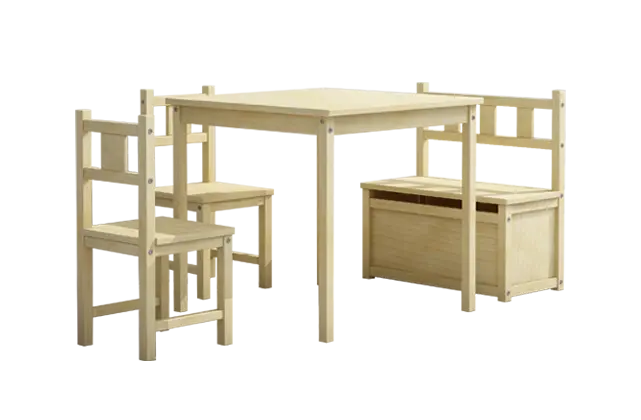
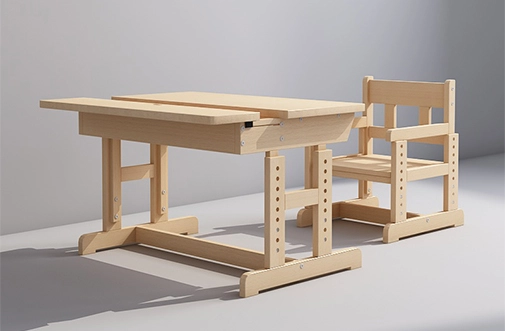
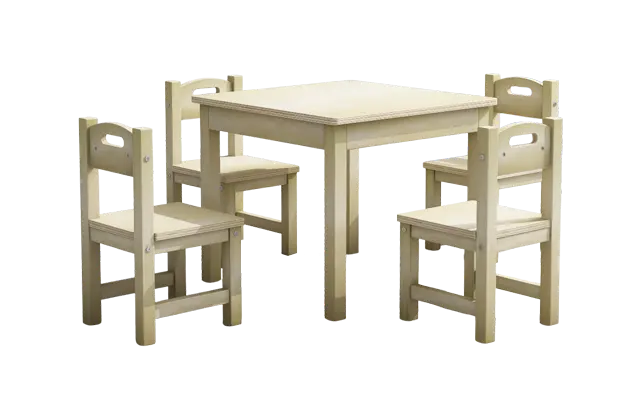
A well-designed cube weaning table and chairs solution — combining low-VOC birch plywood construction, rounded edge finishing, anti-tip stable geometry, tested load-bearing performance, non-toxic coating documentation, and export-ready packaging — should help toddlers sit, eat, play, draw, and learn independently while reducing the compliance risks that B2B buyers in regulated markets cannot afford to ignore. Homish's functional kids activity chairs and table are made from birch plywood, designed with rounded corners and edges, and sized so the chairs can fit neatly under the table for compact storage — providing the construction quality and design safety that wholesale kids furniture quality standards require.
This guide covers the complete picture for children's furniture wholesalers, Montessori distributors, and retail chain procurement teams: why compliance risk is the real cost for B2B buyers, what makes a cube weaning table and chairs set safer for toddlers, the five safety standards that every bulk buyer must verify before placing orders, how to evaluate weaning table and chair set components for material safety and structural performance, and what procurement and maintenance practices protect buyers and end users through the product's service life.
Why Compliance Risk Is the Real Cost for B2B Buyers — and Why the Safety Evaluation of a Weaning Table and Chair Set Must Begin Before the Purchase Decision
The risk management case for rigorous safety evaluation of weaning table and chair sets starts with a clear understanding of the specific compliance and commercial consequences that a safety failure creates for B2B buyers in the children's furniture category — and why these consequences are disproportionately severe compared with the cost of thorough pre-purchase safety verification.
The Compliance Cascade That a Single Safety Failure Creates
Import rejection and recall costs are the most immediately financially damaging consequences of safety failures in children's furniture procurement — because they eliminate the commercial value of the entire bulk order, create the logistics and disposal costs of managing rejected or recalled inventory, and generate the regulatory scrutiny that affects future import clearance for the buyer's entire product range. For children's furniture wholesalers and retail chain buyers who have committed to large bulk orders based on price and delivery schedule without adequate safety evaluation, an import rejection or recall can create financial losses that far exceed the cost saving that motivated the original procurement decision.
Retail delisting and distribution relationship damage are the medium-term commercial consequences that most directly affect the buyer's ongoing business viability. When a safety incident associated with a specific children's furniture product reaches retail buyers or regulatory authorities, the response is typically immediate delisting — removing not only the affected product but potentially the buyer's entire range from the retailer's assortment while the safety investigation is conducted. For Montessori furniture distributors and educational product wholesalers whose business depends on maintaining retail and institutional relationships built over years, the reputational damage from a single safety incident can affect commercial relationships that took years to establish.
Liability exposure from toddler injuries is the legal consequence that creates the most severe long-term financial risk for B2B buyers who have imported and distributed non-compliant children's furniture. In markets with strong consumer protection frameworks — particularly the United States and European Union — liability for injuries caused by non-compliant children's products can extend through the supply chain to importers and distributors, creating legal exposure that is not limited to the value of the original purchase.
What Makes a Cube Weaning Table and Chairs Set Safer for Toddlers — and Why the Safety Specification Is the Most Important Procurement Decision for Bulk Orders
Understanding what a weaning table and chair set is — and how the specific design features, material choices, construction standards, and compliance documentation of a safe cube weaning table and chairs solution work together to create a product that protects toddlers, satisfies regulatory requirements, and delivers the commercial value that B2B buyers need — is essential for procurement managers evaluating children's furniture specifications for regulated markets.
Product Definition: Weaning Table and Chair Set as a Toddler Independence and Safety System
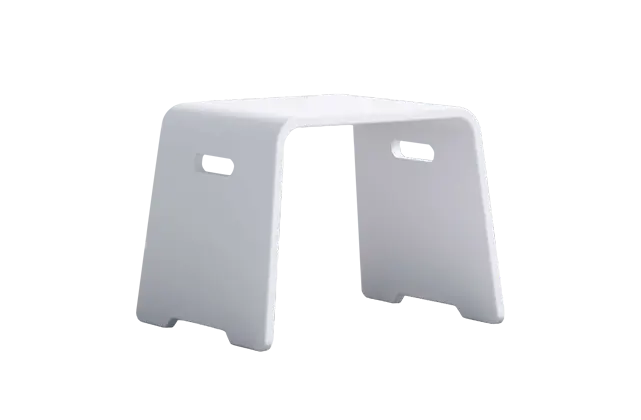
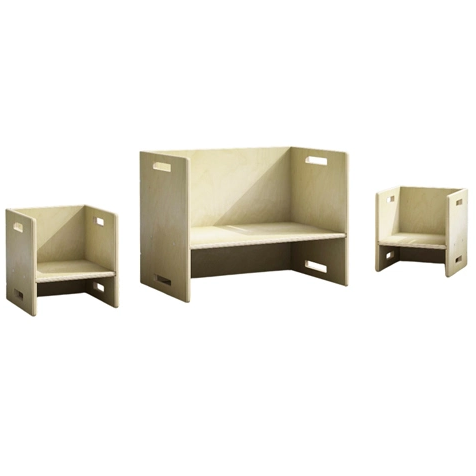
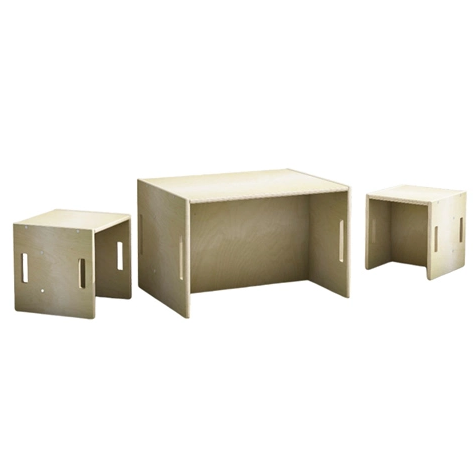
A weaning table and chair set is a child-sized furniture set designed to support toddlers during early feeding, play, reading, drawing, sensory activities, and independent sitting — providing the child-proportioned dimensions, stable structure, and safe surface finishing that toddler use requires. A cube weaning table and chairs set uses a compact, stable, multi-functional shape where the cube-style chair may support different seating or activity heights depending on orientation, making it useful for toddlers at different development stages and suitable for the Montessori philosophy of child-led independence.
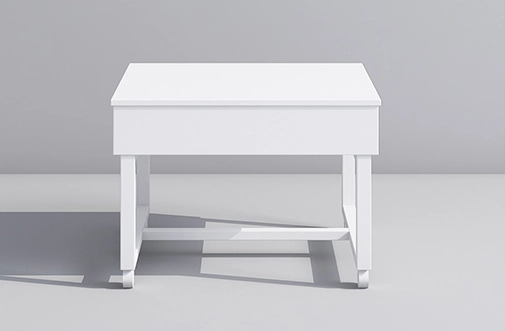
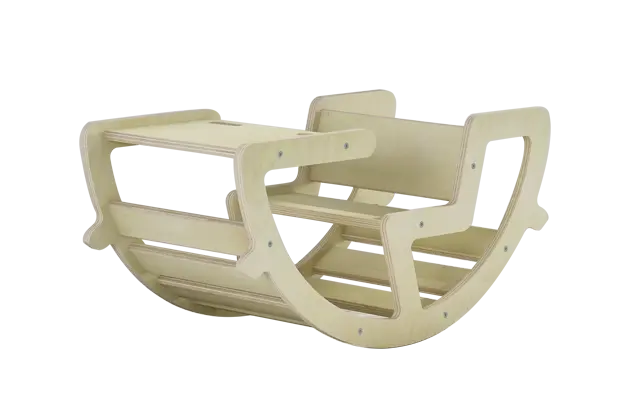
Homish's functional kids activity chairs and table are described as a CUBE kids table and armchairs set made from birch plywood — highlighting rounded corners and edges, compact design, smooth surfaces for easy cleaning, and chairs that fit neatly under the table for space-efficient storage in homes, classrooms, and playrooms.
Core Safety and Commercial Value Framework
| Feature | Safety Value | Commercial Value for B2B Buyers |
|---|
| Birch plywood material | Structural strength and premium appearance | Supports premium positioning and Montessori appeal |
| Rounded corners and edges | Reduces cut and impact injury risk | Reduces liability exposure and parent complaints |
| Compact cube design | Low center of gravity for stability | Space efficiency for classrooms and retail display |
| Easy-clean surface | Reduces chemical residue from cleaning | Reduces after-sales complaints from schools and parents |
| Chairs fit under table | Reduces trip hazard when not in use | Compact storage for retail and classroom environments |
The 5 Safety Standards Every B2B Buyer Must Verify Before Bulk Ordering a Weaning Table and Chair Set
The five safety standards that determine whether a weaning table and chair set can enter regulated markets, remain on retail shelves, and deliver the compliance confidence that wholesale kids furniture quality standards require — and why each standard must be verified through documentation rather than assumed from product appearance — is the core compliance knowledge that procurement managers and QA teams need to evaluate children's furniture specifications for 2026.
Standard 1: Low-VOC Material Emission Safety
Low-VOC performance is the environmental and health safety standard that has become most prominent in 2026 children's furniture procurement — because toddlers use weaning tables and chairs in enclosed indoor spaces such as nurseries, classrooms, playrooms, and daycare centers where chemical emissions from wood panels, adhesives, coatings, and finishes accumulate in the breathing zone of children who are most vulnerable to chemical exposure. The EU Green Public Procurement furniture criteria include a low-VOC emission benchmark using chamber testing after 28 days, with TVOC concentration limits specified in the criteria — providing a useful reference point for B2B buyers building their 2026 quality checklist even when not legally mandatory for every purchase.
Buyers should request low-VOC test reports, formaldehyde emission reports, coating safety reports, adhesive safety declarations, and material safety data sheets that confirm the product's indoor-use suitability for the target market's requirements.
Standard 2: Rounded Corners and Anti-Collision Edge Design
Toddlers frequently bump into furniture while learning to walk, sit, stand, and move independently — making the sharpness of all exposed furniture surfaces a direct injury risk rather than a theoretical concern. Rounded corners and smooth edge finishing on all exposed surfaces of the table and chairs reduce the severity of the cuts, scratches, and impact injuries that occur when toddlers bump into or fall near the furniture during active play and daily use. Homish specifically highlights rounded corners and edges for its functional kids activity chairs and table, positioning safety as a core design feature rather than an afterthought.
Buyers should inspect corner radius, edge sanding quality, surface smoothness, absence of burrs or splinters, smooth handle or cut-out areas, and absence of exposed sharp hardware on all components.
Standard 3: Anti-Tip Stability Structure
A weaning table and chair set must remain stable when toddlers lean against the table, shift their weight in the chair, push against the furniture, or climb in and out of the chair — creating the dynamic load conditions that cause tipping in furniture with inadequate stability design. Anti-tip performance depends on the chair footprint width, table leg geometry, seat height relative to the child's center of gravity, weight distribution between the furniture body and any storage elements, and the side-loading stability that simulates the lateral forces that toddler use creates.
For children's folding chairs and stools, CPSC states that the regulation incorporates ASTM F2613 and that third-party testing is required for children's products under applicable safety rules — providing the regulatory framework that U.S. market buyers must verify for their specific product classification.
Standard 4: Load-Bearing and Structural Strength Testing
Toddler furniture must withstand repeated sitting, pushing, pulling, and the occasional misuse that daily daycare or classroom use creates — making load-bearing testing the structural safety verification that confirms the chair, table, screws, joints, and panels can handle the cumulative stress of realistic use conditions. Static load testing verifies that the structure can support the maximum recommended load without deformation, while dynamic load testing simulates the repeated loading and unloading cycles that daily use creates.
Buyers should request static load test records, dynamic load test records, chair leg strength data, tabletop pressure resistance data, screw pull-out resistance data, and joint durability records that confirm the product's structural performance under realistic toddler use conditions.
Standard 5: Coating, Chemical Compliance, and BPA-Free Documentation
For wooden children's furniture, the primary chemical safety concerns are the coatings, paints, adhesives, and any plastic components used in the product — because these are the materials most likely to contain regulated substances that create compliance risk in U.S. and EU markets. Buyers should request non-toxic coating reports, heavy metal migration test reports, BPA-free declarations for any plastic components, phthalate compliance documentation if plasticized parts are used, and EN71-3 test reports if the product is sold as a toy or play product in EU markets.
For U.S. compliance, CPSC rules prohibit children's toys and child care articles containing more than 0.1% of certain phthalates in accessible plasticized components — making chemical declarations and test reports for any plastic wheels, accessories, or coatings essential for U.S. market compliance verification.
Weaning Table and Chair Set Component Breakdown and Wholesale Quality Evaluation Guide
The systematic evaluation of weaning table and chair set components — birch plywood quality, coating compliance, structural assembly, edge finishing, fastener security, and packaging protection — against the safety requirements of the specific target market is the technical procurement knowledge that ensures the selected product delivers the compliance documentation and construction quality that regulated market entry requires.
Core Component Safety Evaluation Framework
| Component | Safety Evaluation Criterion | Compliance Relevance |
|---|
| Birch plywood | Grade, thickness, moisture content, surface defects | Structural integrity and formaldehyde emission |
| Coating and finish | Low VOC, smoothness, heavy metal migration | Chemical safety compliance for target market |
| Tabletop | Flatness, load strength, easy-clean surface | Structural performance and daily use suitability |
| Chair body | Stability, seat height, back support, footprint | Anti-tip geometry and toddler ergonomics |
| Corners and edges | Rounded radius, sanding quality, no burrs | Cut and impact injury prevention |
| Fasteners | Secure, recessed, non-loose, no small-part risk | Structural safety and choking hazard prevention |
| Packaging | Carton strength, EPE protection, drop-test readiness | Export shipping damage prevention |
Homish lists birch plywood as the raw material for its functional kids activity chairs and table, with chair dimensions of 28W × 30D × 30H cm and table dimensions of 62.6W × 40D × 47H cm — and five-layer brown carton packaging with protective materials including EPE film, paper board, and foam for export shipping protection.
Homish Factory Quality Control Process
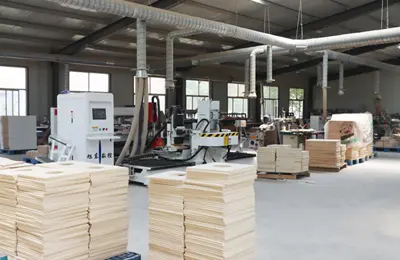
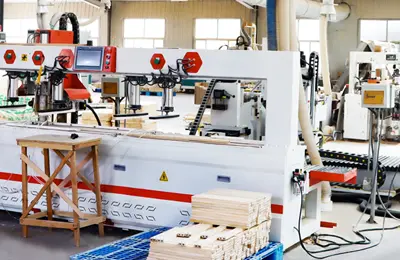
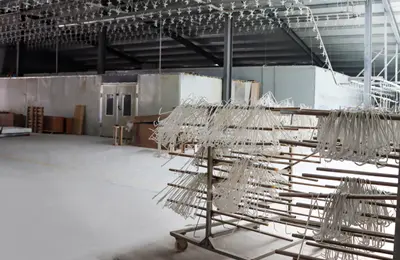
Homish's quality control process covers the complete production sequence that wholesale buyers should verify when evaluating supplier reliability: raw material inspection checking birch plywood quality, moisture content, thickness, and surface defects; cutting and shaping control verifying dimensions and component consistency; edge rounding and sanding reducing burrs, sharp edges, and splinter risk; coating inspection checking color consistency, smooth finish, and low-VOC documentation; structural assembly testing inspecting joints, screws, seat stability, and table strength; anti-tip and load-bearing verification simulating toddler sitting, leaning, and daily use; surface and cleaning testing confirming wipeable finish for snack, art, and classroom use; packaging inspection verifying carton strength and protective materials for export; and pre-shipment QC confirming product dimensions, accessories, labels, and sample consistency.
Cube Weaning Table and Chairs vs Standard Kids Table Set
| Evaluation Factor | Cube Weaning Table and Chairs | Standard Kids Table Set |
|---|
| Use stage | Optimized for toddler transition and independent sitting | Often broader age range |
| Design flexibility | Cube chair may support multi-orientation use | Usually fixed chair height |
| Storage efficiency | Compact — chairs tuck under table | Depends on design |
| Montessori appeal | High — child-proportioned and independence-focused | Medium to high |
| Safety focus | Low height, stable form, rounded edges | Varies significantly by supplier |
| B2B positioning | Premium toddler furniture for daycare and Montessori | General playroom furniture |
Weaning Table and Chair Set Procurement Checklist and Maintenance Guide
Procuring the right weaning table and chair set for a specific market and application requires systematic pre-order confirmation of compliance requirements, safety documentation, construction specifications, and quality control procedures — and end-user maintenance guidance that protects the product's structural integrity and extends its service life in classroom and home environments.
Pre-Procurement Checklist for Weaning Table and Chair Set Bulk Buyers
Before requesting a quotation for weaning table and chair sets, prepare and confirm the following:
Confirm the target market and product classification — furniture, toy furniture, or children's product — and identify the specific safety standards, certification requirements, and documentation that the product must meet for market entry
Confirm the low-VOC and formaldehyde emission documentation requirements — and request test reports that confirm the wood panels, adhesives, coatings, and finishes meet the indoor air quality standards of the target market
Confirm the coating and chemical compliance documentation — and request heavy metal migration test reports, BPA-free declarations for any plastic components, and phthalate compliance documentation for the target market
Confirm the anti-tip stability testing — and request internal QC test procedures or stability test data that demonstrate the chair and table remain stable under realistic toddler use conditions
Confirm the load-bearing capacity — and request load testing data that confirms the structure, joints, and fasteners remain stable under the maximum recommended load
Confirm the packaging protection — and verify that the export carton design with EPE film, paper board, and foam provides adequate drop-test protection for the shipping conditions of the destination market
Confirm the private-label packaging availability — and verify that the supplier can provide custom packaging, assembly instructions, and labeling that meet the buyer's brand and market requirements
Maintenance Guide for End Users
Use on flat indoor surfaces — avoiding uneven outdoor surfaces that create the dynamic load conditions that most stress the furniture's anti-tip geometry
Avoid exceeding the recommended load capacity — overloading stresses joints and fasteners beyond their design limits
Wipe clean with a soft damp cloth — avoiding soaking wooden parts in water that can affect wood structure and coating adhesion
Check screws and joints regularly — verifying that fasteners remain tight prevents the progressive loosening that creates structural safety risks
Do not allow children to climb on the table — the tabletop is designed for surface use, not climbing load
Stop use immediately if any part becomes loose or damaged — and do not return the furniture to use until the loose component has been properly secured or replaced
Conclusion: Safe Weaning Table and Chair Sets Are the Wholesale Investment That Protects Toddlers, Protects Buyers, and Delivers the Compliance Documentation and Construction Quality That Regulated Markets Require in 2026
In 2026, the children's furniture wholesalers, Montessori distributors, daycare suppliers, and retail chain buyers that achieve the strongest market entry success, the lowest compliance risk, and the most consistent repeat order performance from their toddler furniture programs are those that evaluate weaning table and chair sets as compliance-critical children's products — investing in the low-VOC material documentation, rounded edge finishing, anti-tip stability testing, load-bearing verification, chemical compliance documentation, and factory QC process transparency that regulated markets require and that retail buyers, institutional procurement teams, and parents expect. A cube weaning table and chairs set that meets these five safety standards is not simply a safer product — it is a commercially stronger product that can enter more markets, remain on more retail shelves, and generate the repeat orders that make a wholesale relationship commercially viable over the long term.
Homish supports wholesalers, retailers, Montessori suppliers, daycare buyers, and private-label brands with children's tables, chairs, activity furniture, play furniture, and wooden kids furniture solutions designed for safety, durability, practicality, and long-term B2B supply.
Contact Homish today to discuss your target market, safety documentation needs, low-VOC report requirements, quantity, private-label packaging, color options, inspection process, and bulk order plan for weaning table and chair sets. Homish can help evaluate the right cube weaning table and chairs specification for your market and application and provide the compliance documentation, quality control process, and supply reliability that professional children's furniture wholesale procurement requires.
Frequently Asked Questions
Q1: What safety standards should B2B buyers verify for a weaning table and chair set in 2026?
Buyers should verify applicable market requirements including ASTM F2613 and CPSC-related rules for the U.S. market, EN71 or CE documentation if the product is classified as a toy or play product in Europe, low-VOC and formaldehyde emission test reports for indoor air quality compliance, coating heavy metal migration test reports, anti-tip stability testing records, load-bearing test data, and pre-shipment QC documentation. The correct compliance requirements depend on the product classification — furniture, toy furniture, or children's product — and the specific target market, so buyers should confirm the classification with their compliance team before placing bulk orders.
Q2: Why is low-VOC performance important for a weaning table and chair set?
Low-VOC performance is important because toddlers use weaning tables and chairs in enclosed indoor spaces — nurseries, classrooms, playrooms, and daycare centers — where chemical emissions from wood panels, adhesives, coatings, and finishes accumulate in the breathing zone of children who are most vulnerable to chemical exposure. For B2B buyers, low-VOC test reports support safer product positioning, improve retailer and institutional buyer confidence, and reduce the liability exposure associated with chemical safety concerns in children's furniture.
Q3: What makes a cube weaning table and chairs set safer than a standard kids table set?
A cube weaning table and chairs set offers a low height that reduces fall injury severity, a stable compact structure with a low center of gravity that improves anti-tip performance, rounded corners and edges on all exposed surfaces that reduce cut and impact injury risk, child-proportioned dimensions that support toddler independence and correct posture, and compact storage design where chairs tuck under the table to reduce trip hazards when not in use. The cube-style chair may also support multi-orientation use for different development stages, providing functional flexibility that standard fixed-height chairs cannot offer.
Q4: What documentation should buyers request before bulk ordering a weaning table and chair set?
Buyers should request birch plywood material reports, low-VOC emission test reports, formaldehyde emission test reports, coating heavy metal migration test reports, BPA-free declarations for any plastic components, phthalate compliance documentation if plasticized parts are used, anti-tip stability test records, load-bearing test records, edge and corner inspection checklists, packaging drop-test records, and pre-shipment inspection reports — confirming all documentation before committing to bulk production.
Q5: Why choose Homish for wholesale kids furniture quality standards compliance?
Homish offers children's wooden furniture products designed for play, learning, and daily activities — with its functional kids activity chairs and table using birch plywood construction, rounded corners and edges, compact cube-style design, easy-clean surfaces, and five-layer carton packaging with EPE film, paper board, and foam protection for export shipping. Homish supports B2B buyers with the material documentation, factory quality control process, and product specifications that wholesale kids furniture quality standards require for regulated market entry.
 Dec 07, 2025