For toy wholesalers, kindergarten suppliers, Montessori classroom buyers, retail chains, and educational product distributors, a toy supermarket trolley is not simply a pretend-play item that children push around a playroom — it is a children's mobility product that must balance imaginative play value, developmental benefit, structural stability, material safety, and regulatory compliance in a way that protects children from injury, protects buyers from liability and recall risk, and protects brands from the reputational damage that a single safety incident can create across an entire product line. When buyers source wooden play carts in bulk for regulated markets in the United States, European Union, United Kingdom, Australia, or the Middle East, the compliance question is not a secondary consideration that can be addressed after the purchase decision — it is the primary evaluation criterion that determines whether the product can enter the market, remain on retail shelves, and generate the repeat orders that make a wholesale relationship commercially viable.
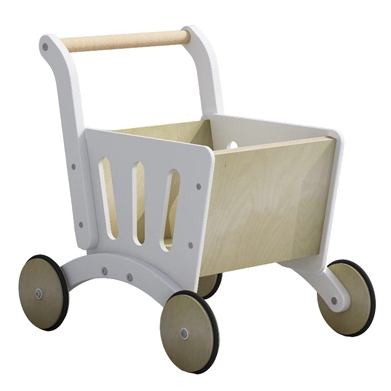
A well-designed wooden play cart that combines natural wood construction, anti-tip geometry, rounded edge finishing, secure hardware, non-toxic coating, and tested load-bearing performance can support imaginative shopping games, motor skill development, balance practice, and classroom organization while reducing the risk of the sharp-edge injuries, tipping incidents, wheel failures, and chemical exposure concerns that generate the product recalls, import rejections, retail delistings, and liability claims that B2B buyers in the children's product category fear most. Homish's kids play carts are made from natural wood, designed with sturdy construction, smooth-rolling wheels, comfortable handles, and spacious storage compartments for toys, books, or stuffed animals — providing the construction quality and design safety that safety-focused wholesale procurement requires.
This guide covers the complete picture for toy wholesalers, educational product distributors, Montessori furniture buyers, and retail chain procurement teams: why compliance risk is the biggest concern for B2B buyers, what makes a safe wooden play cart different, how anti-tip design, rounded edges, and load testing prevent injuries, how to evaluate play cart components for safety and durability, and what procurement and maintenance practices protect buyers and end users through the product's service life.
Why Compliance Risk Is the Biggest Concern for B2B Buyers — and Why a Single Safety Issue Can Eliminate the Commercial Value of an Entire Bulk Order
The risk management case for rigorous safety evaluation of toy supermarket trolleys starts with a clear understanding of the specific compliance and liability consequences that a safety failure creates for B2B buyers in the children's product category — and why these consequences are disproportionately severe compared with the cost of thorough pre-purchase safety evaluation.
The Compliance and Commercial Consequences of Safety Failures in Children's Products
Product recalls and import rejection are the most immediately costly consequences of safety failures in children's toy procurement — because a recall or import rejection eliminates the commercial value of the entire inventory, creates the logistics and disposal costs of managing recalled stock, and generates the regulatory scrutiny that affects future import clearance for the buyer's entire product range. For toy wholesalers and retail chain buyers who have committed to large bulk orders based on price and delivery schedule without adequate safety evaluation, a recall can create financial losses that far exceed the cost saving that motivated the original procurement decision.
Retail delisting and brand reputation damage are the medium-term commercial consequences that most directly affect the buyer's ongoing business relationships. When a safety incident associated with a specific product reaches retail buyers, the response is typically immediate delisting — removing not only the affected product but potentially the buyer's entire range from the retailer's assortment while the safety investigation is conducted. For educational product distributors and toy wholesalers whose business depends on maintaining retail relationships built over years, the reputational damage from a single safety incident can affect commercial relationships that took years to establish.
Liability claims from end-user injuries are the legal consequences that create the most severe long-term financial exposure for B2B buyers who have imported and distributed non-compliant children's products. In markets with strong consumer protection frameworks — particularly the United States and European Union — liability for injuries caused by non-compliant children's products can extend through the supply chain to importers and distributors, creating legal exposure that is not limited to the value of the original purchase.
What Makes a Safe Wooden Play Cart Different — and Why the Safety Specification Is the Most Important Procurement Decision for Bulk Toy Supermarket Trolley Orders
Understanding what a toy supermarket trolley is — and how the specific design features, material choices, construction standards, and compliance documentation of a safe wooden play cart work together to create a product that protects children, satisfies regulatory requirements, and delivers the commercial value that B2B buyers need — is essential for procurement managers evaluating play cart specifications for regulated markets.
Product Definition: Toy Supermarket Trolley as a Children's Mobility and Development Product
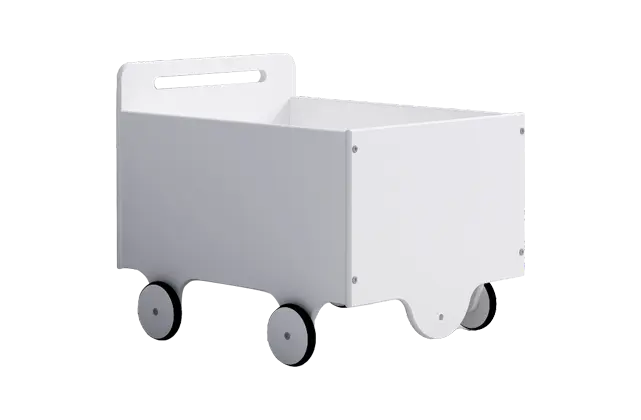
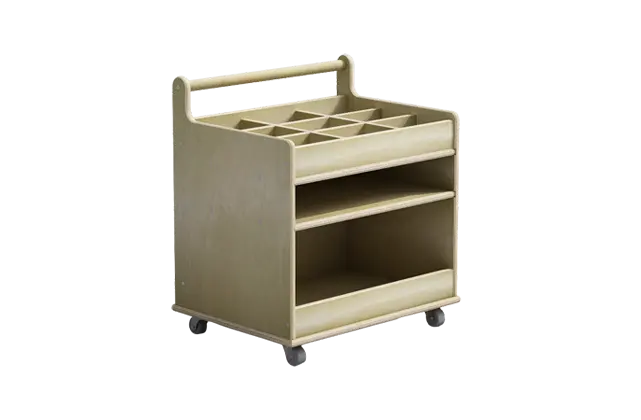
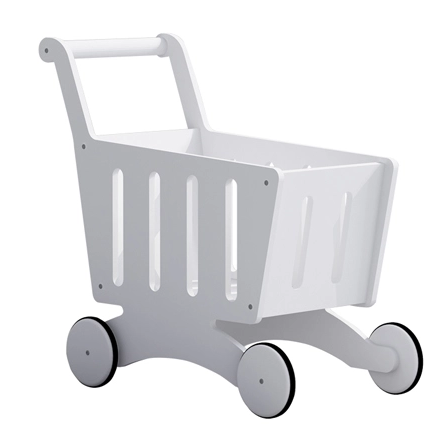
A toy supermarket trolley is a child-sized pretend shopping cart designed for toddlers and young children — allowing them to push, pull, store, and transport toys, dolls, books, pretend groceries, or classroom materials in a format that supports role-play, walking practice, balance, coordination, and social interaction. A wooden play cart uses wood-based panels or solid wood components, smooth wheels, child-friendly handles, and open storage compartments to create a product that combines the developmental benefits of active play with the premium appearance and material safety that Montessori classrooms, kindergartens, and safety-conscious parents require.
Homish positions its kids wooden shopping trolley as both a toy and a learning tool that supports motor skills, coordination, balancing, and imaginative play — providing the developmental value proposition that educational buyers and Montessori suppliers require alongside the construction quality that safety-focused procurement demands.
Core Safety and Commercial Value Framework
| Feature | Safety Value | Commercial Value |
|---|
| Natural wood material | Avoids plastic chemical concerns | Premium appearance for Montessori and educational retail |
| Rounded edges | Reduces cut and impact injury risk | Reduces liability exposure for buyers |
| Smooth wheels | Prevents wheel-related injuries | Better indoor use and quieter movement |
| Stable wide base | Reduces tipping risk | Supports anti-tip compliance requirements |
| Non-toxic coating | Supports chemical safety compliance | Builds parent and buyer trust |
| Secure hardware | Prevents loose small parts | Reduces choking hazard risk |
How Anti-Tip Design, Rounded Edges, and Load Testing Prevent Toddler Injuries — and Why These Safety Features Are the Technical Foundation of Compliant Play Cart Design
The technical mechanism by which anti-tip geometry, rounded edge processing, secure hardware design, and load-bearing testing prevent the specific injuries that toddlers experience with poorly designed play carts — and why these safety features must be evaluated systematically rather than assumed from product appearance — is the core safety knowledge that B2B buyers need to evaluate toy supermarket trolley specifications for safe toys for toddlers wholesale programs.
How Anti-Tip Structure Protects Toddlers During Active Play
Toddlers push, pull, lean on, turn quickly with, and occasionally attempt to climb on play carts — creating the dynamic load conditions that cause tipping in carts with inadequate stability design. Anti-tip performance depends on a combination of wheelbase width that provides a stable footprint, handle height that keeps the center of gravity low relative to the base, balanced weight distribution between the cart body and storage compartment, wheel friction that prevents uncontrolled rolling on smooth floors, and tested turning stability that confirms the cart remains upright during the rapid direction changes that toddler play creates.
Why Rounded Edge Processing Is a Non-Negotiable Safety Requirement
For toddlers whose coordination is still developing, bumps and falls near play equipment are expected rather than exceptional — making the sharpness of exposed edges a direct injury risk rather than a theoretical concern. Rounded corners and smooth finishing on all exposed wood surfaces, handle attachment points, wheel housings, and storage compartment edges reduce the severity of the cuts, scratches, and impact injuries that occur when toddlers bump into or fall near the play cart during active play.
Standards That B2B Buyers Must Understand
For the U.S. market, ASTM F963 is incorporated into U.S. federal toy safety requirements through 16 CFR Part 1250, and third-party testing and certification are generally required for toys intended primarily for children 12 and under. For the EU market, toys must meet the Toy Safety Directive framework, and manufacturers must demonstrate conformity before placing toys on the EU market — with CE marking required for toys made available in the EU. For chemical safety, CPSC rules prohibit children's toys and child care articles containing more than 0.1% of certain phthalates in accessible plasticized components — making chemical declarations and test reports for any plastic components, coatings, or accessories essential for U.S. market compliance.
Why Load-Bearing Testing Matters for Durable Play Carts Bulk Orders
A play cart filled with books, dolls, wooden blocks, and pretend groceries can carry a significant load relative to its structural design — and the repeated loading and unloading cycles of daily classroom or home use create cumulative stress on the cart body, base, wheels, axles, and handle attachment points that can cause structural failure in carts not designed and tested for realistic use conditions. For durable play carts bulk orders, buyers should request load testing data or internal QC test procedures that confirm the structure, base, wheels, and handle remain stable under the repeated loading conditions of toddler use.
Wooden Play Cart Component Breakdown and Safety Evaluation Guide
The systematic evaluation of wooden play cart components — wood material, handle design, wheel construction, fastener security, coating compliance, and packaging protection — against the safety requirements of the specific target market is the technical procurement knowledge that ensures the selected product delivers the compliance documentation and construction quality that regulated market entry requires.
Core Component Safety Evaluation Framework
| Component | Safety Evaluation Criterion | Compliance Relevance |
|---|
| Wooden body | Wood type, thickness, surface finish, moisture content | Structural integrity and splinter risk |
| Handle | Height, grip comfort, attachment strength, pull test | Anti-tip geometry and handle security |
| Wheels | Smooth rolling, axle strength, quiet movement, floor protection | Wheel detachment and mobility safety |
| Axles | Straightness, strength, fastening security | Prevents wobbling and wheel detachment |
| Fasteners | Screw depth, caps, locking method, torque | Reduces loosening and small-part choking risk |
| Coating and paint | Non-toxic finish, heavy metal migration testing | Chemical safety compliance for target market |
| Edges | Rounded, sanded, sealed on all exposed surfaces | Cut and impact injury prevention |
| Packaging | Drop-test protection, inner padding, hardware completeness | Prevents damage during export shipping |
Wooden Play Cart vs Plastic Play Cart: The Safety and Commercial Comparison
| Evaluation Factor | Wooden Play Cart | Plastic Play Cart |
|---|
| Appearance | Natural, premium, Montessori-friendly | Bright, lightweight, mass-market |
| Durability | Strong when well-constructed | Varies significantly by plastic thickness |
| Chemical safety focus | Wood coating and finish compliance | BPA, phthalate, and plastic additive concerns |
| Brand positioning | Premium, educational, eco-style | Budget or colorful toy segment |
| Compliance documentation | Coating test reports, wood material declarations | Plastic material declarations, BPA-free certification |
| Best application | Montessori, daycare, premium toy retail | General pretend-play and lower-cost retail |
Homish Factory Quality Control Process
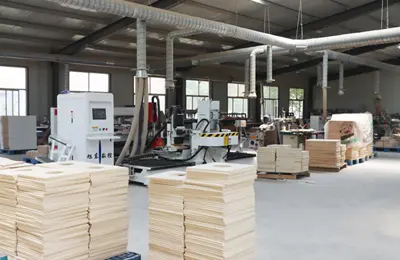
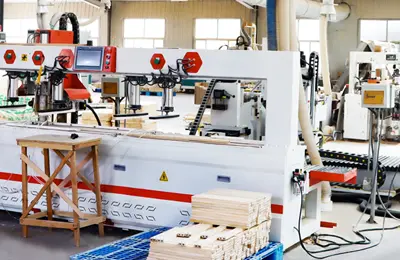
For B2B buyers evaluating supplier reliability, Homish's quality control process covers the complete production sequence: material inspection verifying wood quality, moisture content, surface defects, and coating materials; cutting and shaping control verifying accurate dimensions and smooth profile edges; sanding and rounded-edge inspection reducing splinter and sharp-edge risk; coating inspection confirming smooth finish, color consistency, and chemical documentation; assembly strength testing checking handles, wheels, axles, fasteners, and compartments; anti-tip and load-bearing checks simulating toddler pushing, turning, and loading; packaging inspection confirming carton protection, hardware completeness, and labels; and pre-shipment inspection verifying random samples against buyer specifications.
Toy Supermarket Trolley Procurement Checklist and Maintenance Guide
Procuring the right toy supermarket trolley for a specific market and application requires systematic pre-order confirmation of compliance requirements, safety documentation, construction specifications, and quality control procedures — and end-user maintenance guidance that protects the product's structural integrity and extends its service life in classroom and home environments.
Pre-Procurement Checklist for Toy Supermarket Trolley Bulk Buyers
Before requesting a quotation for toy supermarket trolleys, prepare and confirm the following:
Confirm the target market — U.S., EU, UK, Australia, Middle East — and identify the specific safety standards, certification requirements, and documentation that the product must meet for market entry
Confirm the age grading — and verify that the product design, small-parts control, and safety features are appropriate for the intended age range
Confirm the coating and material compliance documentation — and request test reports for heavy metal migration, chemical safety, and any plastic components for phthalate and BPA compliance
Confirm the anti-tip stability testing — and request internal QC test procedures or stability test data that demonstrate the cart remains upright under realistic toddler use conditions
Confirm the load-bearing capacity — and request load testing data that confirms the structure, base, wheels, and handle remain stable under the maximum recommended load
Confirm the packaging protection — and verify that the export carton design provides adequate drop-test protection for the shipping conditions of the destination market
Confirm the private-label packaging availability — and verify that the supplier can provide custom packaging, assembly instructions, and labeling that meet the buyer's brand and market requirements
Confirm the sample approval process — and verify that pre-production samples will be provided for safety inspection and compliance verification before bulk production begins
Maintenance Guide for End Users
Use the cart on flat indoor surfaces whenever possible — uneven outdoor surfaces create the dynamic load conditions that most stress the cart's anti-tip geometry and wheel axles
Avoid overloading beyond the recommended capacity — overloading stresses the base, wheels, and handle attachment points beyond their design limits
Check screws and wheels regularly — verifying that fasteners remain tight and wheels roll smoothly prevents the progressive loosening that creates small-part and structural safety risks
Wipe clean with a soft damp cloth — avoiding soaking wooden parts in water that can affect wood structure and coating adhesion
Stop use immediately if wheels, axles, or handles become loose — and do not return the cart to use until the loose component has been properly secured or replaced
Supervise toddlers during active play — adult supervision during play cart use allows immediate response to the pushing, turning, and loading behaviors that create the most stress on the cart's safety features
Conclusion: Safe Toy Supermarket Trolleys Are the Wholesale Investment That Protects Children, Protects Buyers, and Delivers the Compliance Documentation and Construction Quality That Regulated Markets Require
In 2026, the toy wholesalers, educational product distributors, Montessori furniture buyers, and retail chain procurement teams that achieve the strongest market entry success, the lowest compliance risk, and the most consistent repeat order performance from their play cart programs are those that evaluate toy supermarket trolleys as safety-critical children's products rather than simple pretend-play items — investing in the anti-tip geometry, rounded edge finishing, secure hardware, non-toxic coating, tested load-bearing performance, and compliance documentation that regulated markets require and that parents, teachers, and retail buyers expect. A wooden play cart that meets these standards is not simply a safer product — it is a commercially stronger product that can enter more markets, remain on more retail shelves, and generate the repeat orders that make a wholesale relationship commercially viable over the long term.
Homish supports B2B buyers with children's wooden furniture and play products, including kids play carts, Montessori trolleys, play tables, wooden blocks, and related early-learning product solutions for schools, retailers, wholesalers, and private-label brands.
Contact Homish today to discuss your target market, safety documentation needs, quantity, private-label packaging, material requirements, load-bearing expectations, and bulk order plan for wooden kids play carts. Homish can help evaluate the right toy supermarket trolley specification for your market and application and provide the compliance documentation, quality control process, and supply reliability that professional children's product wholesale procurement requires.
Frequently Asked Questions
Q1: What safety standards should a toy supermarket trolley meet for U.S. and EU markets?
For the U.S. market, buyers should check ASTM F963, which is incorporated into U.S. federal toy safety requirements through 16 CFR Part 1250, with third-party testing and certification generally required for toys intended for children 12 and under. For the EU market, toys must meet the Toy Safety Directive framework with CE marking required, and EN71-related testing is commonly used to support compliance based on product type, age grading, materials, and mechanical structure. Buyers should also check CPSC phthalate restrictions for any plastic components and request chemical test reports for coatings and surface finishes.
Q2: Why is anti-tip design critical for a toy supermarket trolley?
Toddlers push, pull, lean on, and turn quickly with play carts during active play — creating the dynamic load conditions that cause tipping in carts with inadequate stability design. Anti-tip performance depends on wheelbase width, handle height, center of gravity, weight distribution, and wheel friction working together to keep the cart stable under realistic toddler use conditions. Buyers should request stability test data or internal QC procedures that confirm anti-tip performance before approving bulk orders.
Q3: Why are rounded edges important for wooden play carts?
Rounded edges reduce the risk of cuts, scratches, and impact injuries when toddlers push, pull, bump into, or fall near the play cart during active play. For toddlers whose coordination is still developing, bumps and falls near play equipment are expected rather than exceptional — making the sharpness of all exposed wood surfaces, handle attachment points, and storage compartment edges a direct injury risk that rounded edge processing and smooth finishing must address.
Q4: Are wooden play carts safer than plastic play carts for toddlers?
Wooden play carts often provide better structural stability, a more premium appearance, and a Montessori-friendly aesthetic compared with plastic alternatives. For chemical safety, wooden carts avoid the BPA and phthalate concerns associated with lower-quality plastic materials — but buyers must still request coating and finish test reports for heavy metal migration and chemical compliance. Plastic play carts may be lighter and lower cost, but buyers must carefully verify material safety documentation, structural strength, and compliance with applicable chemical restrictions for the target market.
Q5: What should B2B buyers check before ordering durable play carts bulk?
Buyers should check the applicable safety standards and certification requirements for the target market, coating and material test reports for chemical compliance, anti-tip stability testing data, load-bearing capacity and test procedures, small-parts control and age grading documentation, wheel durability and axle security, packaging drop-test protection for export shipping, factory QC process documentation, sample approval procedures, and private-label packaging availability — confirming all of these specifications before committing to bulk production.

 Aug 26, 2025