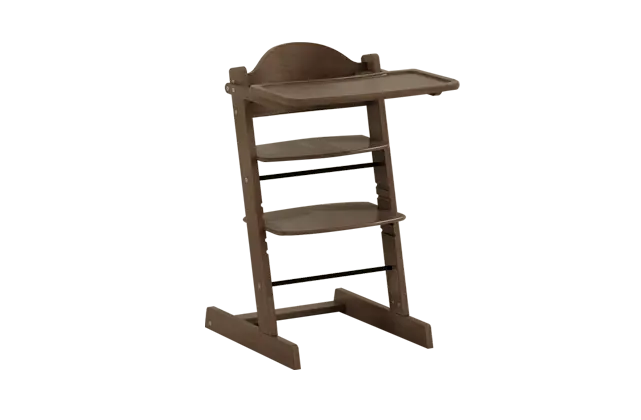
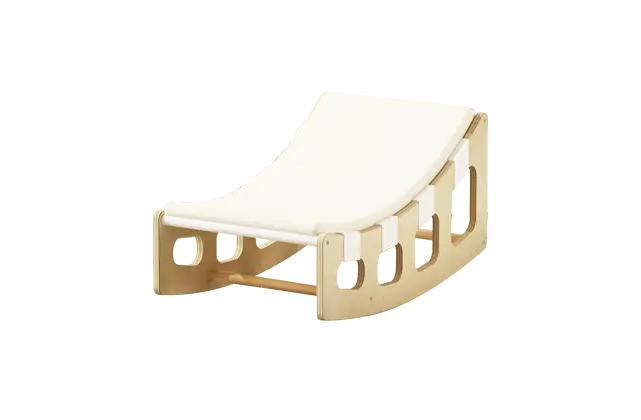
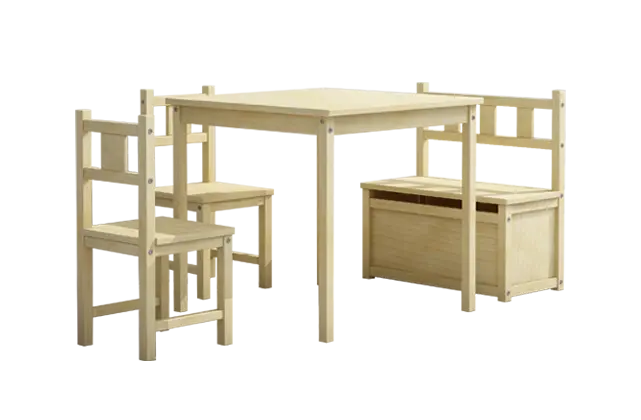
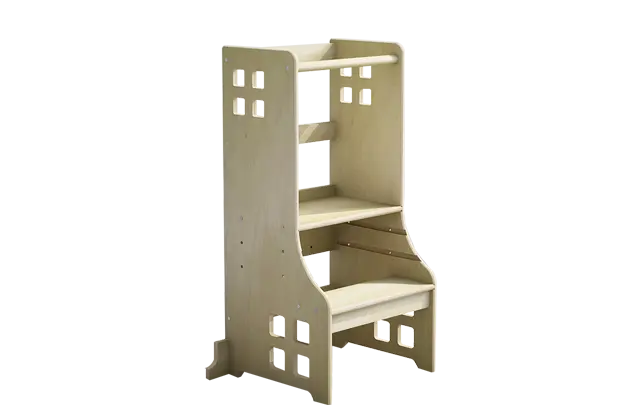
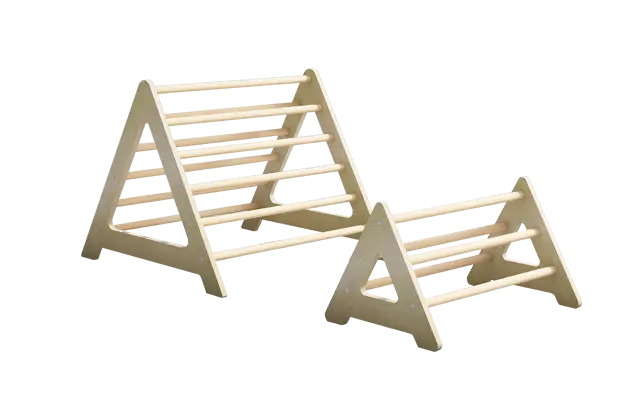
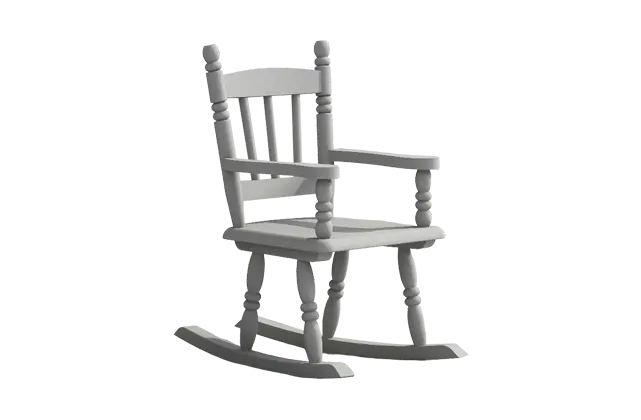
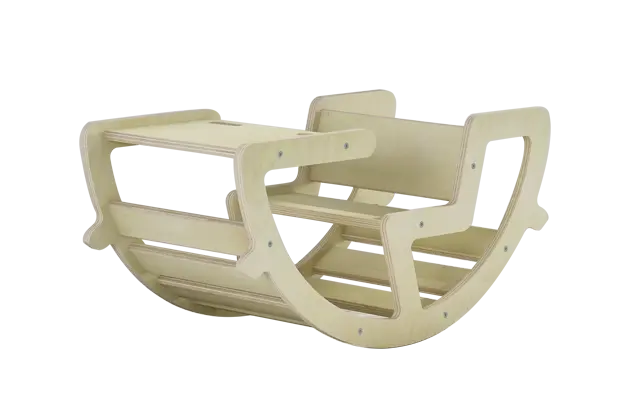
A Waldorf rocker is a curved wooden children's furniture piece designed to support safe rocking, climbing, and open-ended play for toddlers and young children. It is commonly used in Montessori- and Waldorf-inspired environments as multifunctional play equipment that can function as a rocker, seat, and imaginative play structure.
Unlike standard baby furniture that serves a single fixed purpose, a well-designed rocker is intended to evolve with a child's developmental stages and support independent movement exploration in a safe indoor environment.
In this article, we break down what actually defines a high-quality Waldorf rocker from a design, safety, and usability perspective—based on practical product engineering principles.
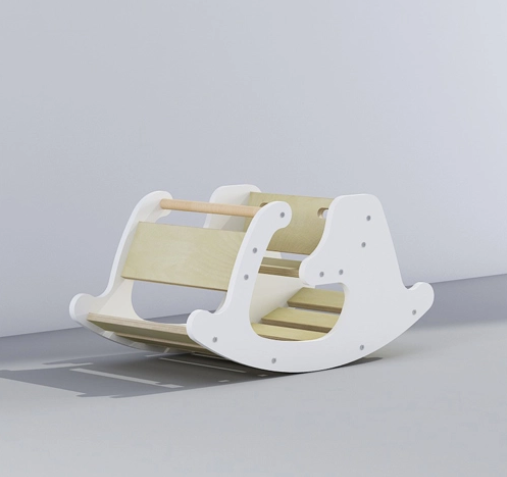
Why Design Quality Matters in a Waldorf Rocker
A rocker is a dynamic piece of furniture. It is not static like a chair—it responds to a child’s body movement, weight shift, and coordination.
Poor design can lead to:
High-quality design ensures:
According to general child development research, early movement experiences contribute to motor coordination and spatial awareness development during ages 1–5 (CDC, Child Development Milestones).
Design Checklist for a High-Quality Waldorf Rocker
Below is a practical checklist parents can use when evaluating a wooden rocker.
1. Stable Rocking Arc Geometry
The base curvature is the most important structural feature.
A high-quality rocker should have:
a smooth continuous curve
no sharp transition points
even weight distribution during motion
Key evaluation point:
The rocking motion should feel predictable rather than abrupt.
2. Low Center of Gravity for Safety
A properly designed rocker must maintain stability when weight shifts occur.
Key characteristics:
Safety benefit:
Reduces tipping risk when toddlers climb or lean forward.
3. Integrated Safety Handles for Control
Handles are not just accessories—they are structural safety components.
A good design includes:
firmly attached side handles
easy grip diameter for toddlers
secure connection to the frame
Handles support:
independent climbing on/off
balance correction during rocking
safer transition between movements
4. Rounded Edge Construction
All contact surfaces should be child-safe.
A high-quality rocker must feature:
This is especially important because toddlers often interact with furniture through climbing, stepping, and holding surfaces directly.
5. Durable Natural Wood Material
Material selection directly affects both safety and lifespan.
Most high-quality wooden rockers use:
These materials are widely used in children's furniture due to their strength-to-weight ratio and long-term durability.
6. Multi-Functional Play Design
A well-designed Waldorf rocker is not limited to one use.
It can function as:
rocking toy
climbing structure
resting seat
imaginative play object
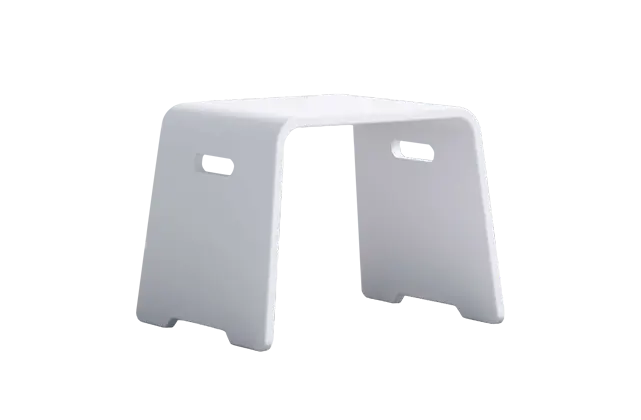
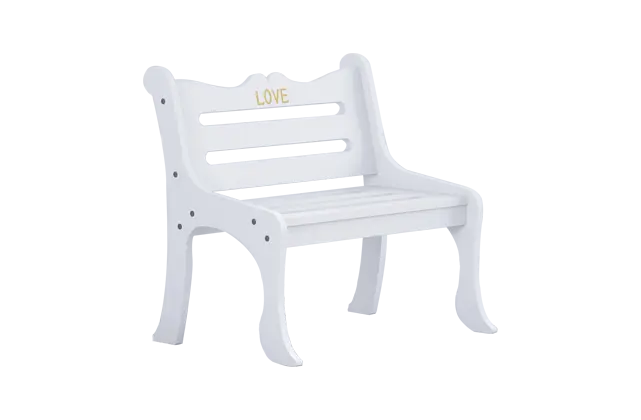
For example, many designs can also be used as a children toy bench, allowing children to sit, read, or rest during play sessions.
7. Proper Size for Independent Use
Size determines usability and safety for toddlers.
Typical design dimensions:
| Dimension | Measurement |
|---|
| Length | ~80 cm |
| Width | ~42 cm |
| Height | ~40 cm |
These proportions allow:
8. Indoor-Friendly Aesthetic Design
Modern families often integrate children's furniture into shared living spaces.
A high-quality rocker should:
This allows the toy to remain part of daily living space instead of being stored away after play.
9. Structural Reinforcement for Long-Term Use
Because rockers are used repeatedly, structural integrity is essential.
A well-built rocker should:
resist joint loosening over time
maintain stability under dynamic movement
withstand climbing and shifting weight
This ensures long-term usability across multiple developmental stages.
Comparison Table: Low vs High-Quality Waldorf Rocker Design
| Feature | Low-Quality Design | High-Quality Design |
|---|
| Rocking Base | uneven or flat curve | smooth continuous arc |
| Handles | weak or missing | integrated secure grip handles |
| Material | thin board or plastic | birch + beech wood |
| Edge Safety | sharp or unfinished | fully rounded and polished |
| Function | single-use rocking | multi-use (rock, seat, climb) |
| Stability | easy tipping | low center of gravity |
Common Mistakes Parents Make When Choosing a Rocker
1. Choosing appearance over structure
Visual design does not guarantee safety or durability. Some rockers may look identical in photos, but their internal construction can be very different. One may use reinforced curved wood layers for stability, while another may rely on thinner panels that can flex under pressure.
2. Ignoring weight balance
Some designs appear stable due to a wide base, but true safety depends on dynamic weight distribution. As children rock, lean, or climb, pressure points constantly change. If the structure is not engineered for movement, small shifts can affect balance.
3. Overlooking long-term usability
A good rocker should grow with the child rather than serve only one short stage. Early use (around 1–2 years) is usually supervised and gentle, while later stages (2–5 years) involve more independent and imaginative play.
Why Waldorf-Inspired Rockers Are Popular in Modern Homes
Waldorf-inspired furniture focuses on simplicity, natural materials, and child-led exploration. These principles align with modern parenting preferences that emphasize:
Brands such as homish kids integrate these principles into furniture design that fits both developmental and aesthetic needs.
Summary
A high-quality Waldorf rocker is defined by structural stability, safe material selection, ergonomic curved design, and multi-functional usability. Parents should prioritize safety features such as low center of gravity, integrated handles, and rounded edges over decorative elements. The best designs support independent play, long-term durability, and seamless integration into home environments, making them both functional furniture and developmental tools for early childhood.
FAQ
1. What age is appropriate for a Waldorf rocker?
Most children can begin using a rocker around 12 months with supervision, depending on motor development.
2. Is a wooden rocker safer than plastic alternatives?
Wooden rockers generally provide better stability, durability, and structural balance when properly designed.
3. Can a rocker be used as furniture?
Yes, many designs can function as seating or a resting bench in addition to play use.
4. How long can children use a rocker?
A well-designed rocker can be used from toddler stage through early childhood (approximately 1–5 years).
5. What is the most important safety feature?
The combination of stable base curvature and low center of gravity is the most critical safety factor.
References
https://www.cdc.gov/ncbddd/childdevelopment/index.html
https://en.wikipedia.org/wiki/Child_development
https://en.wikipedia.org/wiki/Wood
https://en.wikipedia.org/wiki/Montessori_education
https://en.wikipedia.org/wiki/Waldorf_education

 Jul 01, 2026